Choose Your Plants
Once you've chosen the location for your garden, you'll have a better idea of what types of plants you can include in your garden. For example, if you've decided to grow indoors, but you only have a few feet of window sill space available for a garden project, you're probably not going to be planting potatoes and carrots. You might, however, want to plant succulents in a glass terrarium, or sprouts for your lunchtime sandwiches.
Below we've outlined a few different types of gardens to get you thinking about what types of plants you want to include in your garden.
VEGETABLE GARDEN: Vegetable gardens are awesome because you get to eat delicious vegetables in exchange for all your work. This is a great way to expand children's palates at an early age! If kids grow broccoli, kids will eat broccoli. If they grow brussels sprouts, they will eat brussels sprouts. Trust us. One of the best outdoor vegetable garden projects for new gardeners is a simple "salad garden", because lettuces and other greens don't require much space or maintenance.
Tip: Try experimenting with one or two new vegetables per year that aren't necessarily on your kids' "favorites" list. This gives you a chance to expose them to new foods in a way that's fun and interactive.
Important: When planting a vegetable garden, keep in mind that not all vegetables grow well together. Here's a list of good and bad plant combinations:
Good Vegetable Combinations:
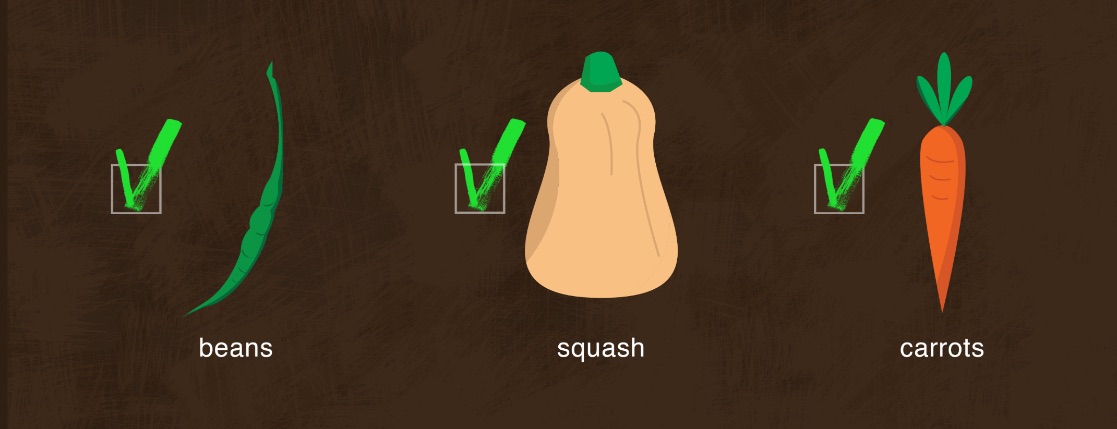
Eggplant, beans
Tomatoes, basil, onions
Lettuce, herbs
Spinach, chard, onions
Vegetable
Combinations to Avoid:
Beans with onions and
garlic
Carrots with dill or fennel
Tomatoes or squash with potatoes
Onions with beans and peas
HERB GARDEN : Herb gardens are great because they're relatively easy to grow, and the fragrant nature of the plants is great for attracting children's interest. Herb gardens can be grown indoors or outdoors, making this ideal year-round project for kids. Some sure-to-please plants include peppermint, spearmint, nasturtiums, sage, and basil. When buying your herbs, remember that some are easily grown from seeds (like nasturtiums, basil, and dill), while others are slower growing and might be better purchased as seedlings (like mint, thyme, and sage). In addition, herbs are also a great way to expand your child's palate by exposing them to new and exciting flavors and spices (think of the delicious meals you'll be able to whip up using the spoils of your garden!)
FLOWER GARDEN: There are lots of options for involving kids in flower gardening. You can let them pick out some seeds based on the pretty pictures on the packets. Some types of flowers pack a double punch for being both easy-to-grow and dramatic - like sunflowers, which can reach up to 8 feet tall! Simple daisies produce lots of blooms for kids to enjoy, display, and craft with. If you're also growing a vegetable garden, why not plant a few nasturtiums or other types of edible flowers? They look great sprinkled on salads or as decorations for cupcakes!