How To Set Up The Tower Garden
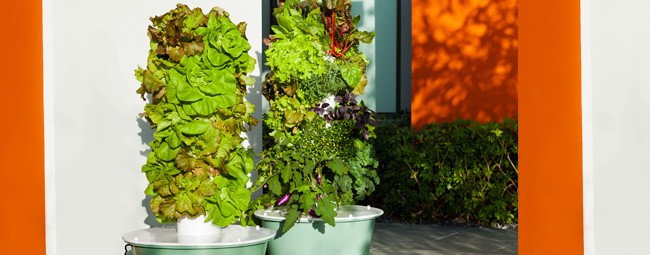
At the bottom of this page you will find the completeTower Garden Growing Guide. (You can also access it online here).
The growing guide provides all the information you need to set up your Tower Garden, start your seeds, and maintain your garden once planted.
Below, we've summarized a few key tips to take note of before you start.
LOCATION:
- On average, it's best to place your Tower Garden in an area where it will receive full sun or high light level for a minimum of 5-6 hours per day. (For summer months when there is intense heat, it can be helpful to have some shade, starting mid-afternoon into the evening). Vegetable crops can grow at lower light levels; however, they are less productive as the percentage of shade increases. Many flowers do fine under shade all day. Read seed labels to determine proper light levels.
- Be sure a clean water source and an electric outlet are located close to the Tower Garden. (An electrical outlet nearby is preferred over a long extension cord. ALWAYS select a waterproof connection when using outdoor extension cords).
- Always select a site that is level, as the Tower Garden will not work properly if it is placed on an uneven surface.
SET-UP
- Make sure you have all the necessary components before you start. Lay out all pieces in front of you and clear the set-up area.
- DO NOT plug the pump in, until you have filled the reservoir with the nutrient solution and water. To avoid electrical shock, form a loop with the cord on the outside of the reservoir near the outlet, preventing water from flowing down the cord and reaching the outlet.
- When installing washers and wing nuts, hand tighten only.
- Once your reservoir is filled with Tower Tonic and cold water, firmly push the access port lid and shower cap into place to prevent algae and debris from contaminating the reservoir.
STARTING YOUR SEEDS:
- When you're ready to seed, remember that each variety of seed
requires a different amount of seeds per hole.
- For lettuce varieties, place 6-12 seeds per hole.
- For herbs, place up to 6 seeds per hole.
- For vegetables with larger seeds, like tomatoes, cucumbers, peppers and beans, place 1-2 seeds per hole.
- For other varieties of seeds, refer to the instructions on the seed packet.
FILLING THE RESERVOIR AND ADDING NUTRIENTS
- Do not overfill the reservoir.
- Do not use softened water, heavily chlorinated water, or very hard water, as it may damage your plants. (NOTE: Chlorine in water can be eliminated by filling a bucket with water and leaving it out in full sun for 48 hours).
- Always use some form of utensil when adding nutrients, as the solution can irritate the skin.
MAINTENANCE:
- Check the water level weekly. During hot months, and also once you have large plants, check the water level at least twice a week.
- pH levels should be checked twice a week. If you notice any yellowing of the leaves, there's a chance your pH is outside the desired range.
- Keep enough nutrient solution in your reservoir so that the submersible pump stays completely submerged. Depending on the outside temperature and crop types, a full reservoir should last 2-3 weeks. During the hot months, your plants will use nutrients and water much faster. Do not let your tank drop down more than half way.
- During cool months, add nutrients to the water every time you fill your reservoir tank. You can mix water and the Tower Tonic in a five gallon bucket prior to adding it to the reservoir (100ml each of Tower Tonic A and Tower Tonic B for each five gallons of water). During hot months, add nutrients every other time you fill your reservoir tank.